
Ice rinks have become one of the most popular attractions for events, Christmas campaigns, shopping centres, trade fairs and leisure spaces. Their ability to bring together people of all ages and offer a unique experience makes them an appealing option for event organisers, businesses and public authorities alike.
However, when it comes to incorporating an ice rink into a project, an important question arises: is it better to install a natural ice rink or a synthetic ice rink?
Both options allow people to enjoy ice skating, but they differ significantly in terms of operation, installation, maintenance, energy consumption and potential uses.
In this article, we explain their main features so you can choose the solution that best suits the needs of your project.
What is a natural or real ice rink?
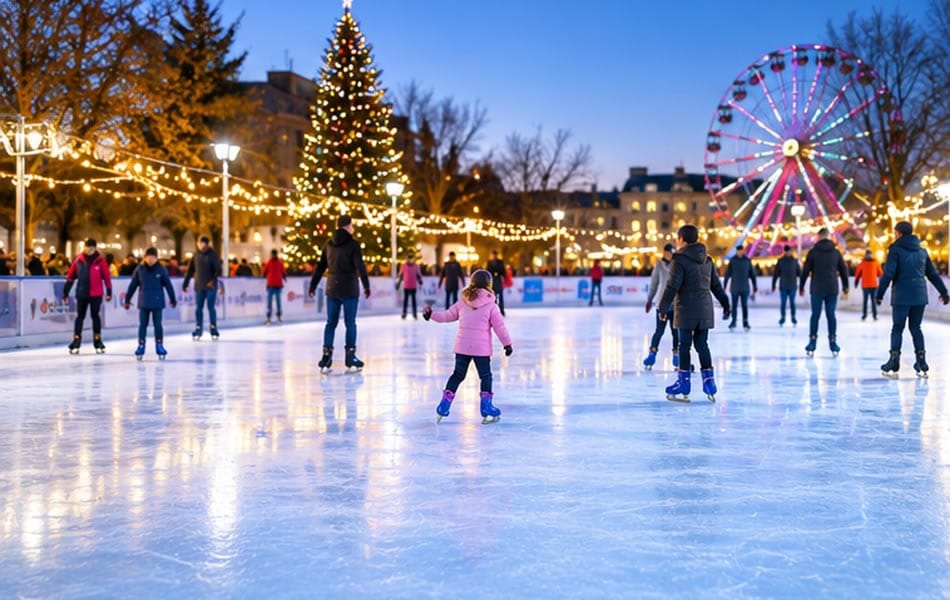
A real ice rink is an installation featuring a frozen water surface on which people can skate using ice skates with metal blades.
To keep the ice in optimal condition, these installations require a refrigeration system that maintains the right temperature, regardless of the ambient conditions.
The refrigeration system circulates a refrigerant fluid through a circuit located beneath the rink surface. This keeps the water frozen and provides a smooth, even surface for ice skating.
Main features of real ice rinks
- Authentic experience: they offer the genuine feel of skating on ice.
- Natural ice surface: They provide the typical conditions of a conventional ice-skating rink.
- Refrigeration system: They require refrigeration equipment to maintain the ice.
- Specialised maintenance: They require regular maintenance work to preserve the quality and smoothness of the surface.
- Installation versatility: They can be installed in both indoor and outdoor spaces, provided that the project's technical requirements are taken into account.
Real ice rinks are particularly suitable for venues looking to offer a traditional ice-skating experience, both at temporary events and in longer-term installations.
What is a synthetic ice rink?
Synthetic ice rinks are an alternative to traditional ice that allows people to enjoy skating without the need to freeze water or use refrigeration equipment.
They are made from special high-density polyethylene panels, designed to provide a smooth-gliding surface on which people can skate using conventional ice skates with metal blades.
These panels are assembled to create a continuous and stable surface that adapts to the dimensions and characteristics of the available space.
At N-Ice, we have been developing and manufacturing our own synthetic skating surfaces since 1978, continuously improving materials and manufacturing processes to offer a durable solution adapted to different types of projects.
Main features of synthetic ice rinks
- No refrigeration required: They operate without refrigeration equipment or water-freezing systems.
- Versatile installation: They can be installed indoors and outdoors, on different types of spaces and suitably prepared surfaces.
- Low maintenance: They do not require the specific maintenance work needed to preserve real ice.
- Lower energy consumption: They eliminate the need to keep a surface frozen through refrigeration.
- High durability: The materials are designed to provide a long service life.
- Customisation: they allow the creation of rinks in different sizes, shapes and configurations.
Thanks to their features, synthetic ice rinks are a very attractive alternative for projects looking for a practical, versatile installation with low operating costs.
Differences between natural and synthetic ice rinks
Although both solutions allow people to enjoy skating, there are differences worth knowing before making a decision.
Here are the main ones:
1. Skating experience
The most noticeable difference lies in the surface.
Real ice provides the authentic feel of traditional ice skating, with its characteristic glide and a surface that must be kept in good condition throughout the activity.
Synthetic ice uses polyethylene panels specially developed for skating with metal blades. The experience differs from that of real ice and has its own specific gliding characteristics.
The choice will depend on the type of experience you want to offer and the needs of the users.
2. Energy consumption
This is one of the most important differences.
Real ice rinks require refrigeration systems to operate continuously to keep the surface frozen.
Synthetic ice rinks, on the other hand, do not require electricity for refrigeration or ice maintenance, significantly reducing the energy costs associated with the installation.
For this reason, synthetic ice can be particularly appealing for projects where energy consumption is a decisive factor.
3. Installation and maintenance
Real ice rinks require a technical installation that includes the refrigeration system, cooling circuits and the components needed to produce and maintain the ice.
In addition, while in operation, they require specific surface maintenance to ensure suitable skating conditions.
Synthetic ice rinks feature a simpler installation system. The panels are assembled to form the skating surface and do not require refrigeration equipment.
Maintenance requirements are also lower, although cleaning, joint inspections and panel upkeep are still necessary.
4. Location and environmental conditions
Both types of rinks can be installed in different locations, both indoors and outdoors.
However, environmental conditions are particularly important for real ice rinks, as outdoor temperatures, solar radiation and humidity can affect the operation of the refrigeration system and the preservation of the ice.
Synthetic ice rinks do not depend on temperature to maintain their skating surface, offering greater flexibility in this respect.
5. Investment and operating costs
The budget for an ice rink depends on numerous factors: dimensions, installation duration, location, transport, assembly, equipment and additional services.
In general, synthetic ice rinks require a lower investment and have lower operating costs compared to real ice installations, particularly due to the absence of refrigeration equipment.
Real ice rinks, on the other hand, require more complex technical infrastructure and higher energy consumption, but they offer the traditional ice-skating experience.
For this reason, it is important to consider not only the initial cost, but also the operating expenses throughout the entire period of activity.

Comparison table: real or synthetic ice
| Feature | Real ice | Synthetic ice |
|---|---|---|
| Surface | Frozen water | Polyethylene panels |
| Experience | Traditional ice skating | Skating on a synthetic surface |
| Refrigeration | Required | Not required |
| Energy consumption | Higher | Very low |
| Maintenance | Ice-specific maintenance | Low |
| Installation | Greater technical complexity | Simpler |
| Temperature dependence | Yes | Not required to maintain the surface |
| Indoor and outdoor use | Yes, subject to technical requirements | Yes |
| Customisation | Depending on the project design | Wide variety of shapes and sizes |
What type of ice rink is best for your event?
There is no single answer. The best option will depend on the project's characteristics, the available budget and the experience you want to offer visitors.
When should you choose a real ice rink?
A real ice rink may be the best option when:
- You want to offer a traditional ice-skating experience.
- The project requires a genuine ice surface.
- A large-scale installation is required.
- The event requires specific skating conditions.
- The necessary space and technical resources are available.
It is a particularly attractive solution for large-scale events, Christmas campaigns, shopping centres, sports facilities and leisure venues.
When should you choose a synthetic ice rink?
A synthetic rink may be the most suitable option when:
- The aim is to reduce operating costs.
- The aim is to avoid the energy consumption of refrigeration systems.
- The available space has technical limitations.
- A versatile, low-maintenance installation is required.
- The aim is to have a rink available for extended periods.
- The project requires a skating surface that can be adapted to different sizes and layouts.
It is a particularly attractive option for local councils, shopping centres, schools, hotels, leisure parks and all kinds of events.
Is it possible to rent or buy an ice rink?
Yes. Depending on the project's requirements, there are different options available.
Ice Rink Rental
It is a very attractive option for temporary installations, Christmas campaigns, fairs and events. It provides access to a fully equipped rink for the required period without having to invest in purchasing the installation.
Ice rink purchase
For companies, leisure centres or event organisers looking to own their own facility, purchasing a rink can be an attractive investment in the medium and long term.
In this case, it is important to work with a supplier that can provide technical advice, equipment, training and support to ensure the rink operates correctly.
N-Ice: specialists in real and synthetic ice rinks
At N-Ice, we have been working since 1978 on the development, manufacture and installation of ice skating solutions.
We specialise in both real and synthetic ice rinks, offering different options to meet the needs of each project.
We design and manufacture our own synthetic rinks and offer real ice solutions for installations of different sizes and specifications.
We also offer a comprehensive service that can include everything from rink rental or sales to installation, equipment, staff management and technical support.
We work on national and international projects, collaborating with local councils, shopping centres, companies and event organisers.
Are you thinking about installing an ice rink?
At N-Ice, we can help you find the solution that best suits your project. Tell us what you need, where you want to install the rink and for how long, and our team will advise you on the different options available.
Contact us and discover everything we can do for your next ice project.